
Friday, April 13, 2012
LowPriceFabric.com's April Sales Calendar
Just a quick post to let all of our blog followers know about our monthly online sales calendar for April!!! I see discounts on cotton prints, buttons, bridal laces, home decor silks, swimwear prints, and patterns are in your future... Click on the image to visit our online store!


Sunday, April 1, 2012
Liberty of London Spring Sale at Michael Levine's & LowPriceFabric.com!
 The temperate spring months leading into summer are a perfect time to adorn oneself in the high quality wares of the famous London design house, Liberty. Synonymous with the ideals of British design, this brand has become famous for its detailed prints on exquisitely woven cottons and silks that have lead to numerous licensing deals and collaborations with the world's most renown luxury brands. Ever since Liberty's collaborations with Target, Nike, and MAC Cosmetics, to name a few, their brand recognition stateside has skyrocketed. Now opened up to a whole new market of home sewers and designers, the Liberty print fabric collections are highly coveted. We love Liberty of London here at Michael Levine, and to say we make fuss about any new Liberty shipments would be an understatement! This week, we celebrate Liberty of London and make way for the new collection with a clearance sale of 20% OFF all in-stock Liberty of London cotton & tana lawn prints; sale starts Monday April 2nd, 2012 and ends Wednesday April 4th at midnight EST.

A Nike sneaker featuring Umbel print, available in cotton lawn at LowPriceFabric.com!
If you'd like to read a fantastic little post about Liberty's rich history and brand, click here:

If you'd like to shop our current stock of Liberty art prints, click here.


And if you're interested in the Rowan by Kaffe Fassett quilting cotton collection of vintage Liberty prints revisited, click here. (These are not Liberty branded, however they are authorized reproductions of archived Liberty designs in new color stories.)


Either way, there's plenty of Liberty to go round and now's a great time to indulge if you've been holding out! Sale ends Wednesday at midnight EST.
Wednesday, March 28, 2012
New Arrival: Our New Arrivals Section is Finally Here!
We're ready to shine some light on our New Arrivals section! It's been a long time coming, and now it's much easier for you to keep abreast of the new products we're adding weekly. With twelve rotating slots, as new products come in the older ones will be bumped out. Not only are we showing new products, but new categories as well. And as a token of our appreciation for all our blog followers, you can use the coupon code "BLOGFOL" now through Sunday to receive 10% OFF any purchase from our New Arrivals Section! Just a few of our New Arrivals that certainly deserve a mention here:

In conjunction with the recent film release, Dr. Seuss' Lorax fabric collection from Robert Kauffman is perfectly in tune with the film's message in a 100% Organic woven cotton. With a number of coordinating prints, the Lorax can easily become an eco-friendly part of your own or a child's environment!


 In addition to great new fabrics, we've now got a dedicated section for purse hardware, findings, and accessories. Anyone with a fondness for bag making knows how difficult it can be to find the perfect materials to realize your designs! We proudly unveil a diverse array of handles, straps, buckles, hooks, feet, frames, and more, for all your hand-bag or purse making needs!


We've also just added twelve colors of a brand new polyester shantung, which is a staple spring bridal fabric with two usable sides, each with their own unique texture and allure. If you're planning a spring wedding or event and need a low-cost, yet eye catching alternative to silk shantung, either for dress-making or event decor, the polyester shantung is a great option with its timeless charm! Great for prom, formal attire, bridesmaids', or Easter dresses also!
 So don't forget to check out our New Arrivals section periodically; it's a simple way to learn about the latest additions to this relatively new website that we are constantly expanding! Thanks for reading!

In conjunction with the recent film release, Dr. Seuss' Lorax fabric collection from Robert Kauffman is perfectly in tune with the film's message in a 100% Organic woven cotton. With a number of coordinating prints, the Lorax can easily become an eco-friendly part of your own or a child's environment!
In addition to great new fabrics, we've now got a dedicated section for purse hardware, findings, and accessories. Anyone with a fondness for bag making knows how difficult it can be to find the perfect materials to realize your designs! We proudly unveil a diverse array of handles, straps, buckles, hooks, feet, frames, and more, for all your hand-bag or purse making needs! We've also just added twelve colors of a brand new polyester shantung, which is a staple spring bridal fabric with two usable sides, each with their own unique texture and allure. If you're planning a spring wedding or event and need a low-cost, yet eye catching alternative to silk shantung, either for dress-making or event decor, the polyester shantung is a great option with its timeless charm! Great for prom, formal attire, bridesmaids', or Easter dresses also!
So don't forget to check out our New Arrivals section periodically; it's a simple way to learn about the latest additions to this relatively new website that we are constantly expanding! Thanks for reading!
Friday, March 23, 2012
Spring has Sprung! Celebrate with Luxurious Cotton Shirting from Michael Levine and LowPriceFabric.com!
Spring is a great time of year to take advantage of our great shirting selection, most of them being of super fine quality from Italy's finest luxury textile manufacturers. The regular price is unbeatable at $5 to $7 per yard, so with our additional 20% off during this week's Shirting Sale, this is definitely a CAN'T MISS opportunity. I know you're probably thinking, "At such a low price, how luxurious can it be?" But trust me, this is one of THE deals of our store!
Taking a hint from current menswear-inspired trends, high-quality shirting is now a very affordable luxury!

 Our Shirtings are a lightweight, finely woven material with a high thread count, and they are 100% cotton or close to it (a few have a tiny bit of spandex in them for added comfort and mobility). They are so beautiful and soft, the quality really is asstounding. I often refer customers in our store to the shirting section, because the prices are better than a lot of the quilting cottons, and the fabric is of such high quality. To check out our entire shirting selection, click here. And to persuade you to take advantage of this great sale, I figured I'd show you a handfull of my favorite spring home sewing patterns (all of them available in our store - with an everyday low price of 20% OFF MSRP!). This dress pattern by McCalls (#6350) is great. The body of our shirting fabrics would really lend itself well to the pleating and draping of this design.
  And imagine it in this vibrant bubblegum stripe!
  You could also do a tailored shirt or bodysuit for a very classic look, hence the material's namesake. Here, Burda Patterns 2561 & 7353:


I love this acid lime green with orange: Or try one of our double-face gauzes; it's like having a contrast lining without the work of lining the garment; double-face gauze is two-ply, having two usable faces. Imagine a rolled up sleeve!
 For younger girls, I like the idea of a romper. You'd want to line the shorts or bottom part of this style if using shirting, but the results would be so unique! It'd be just the perfect dose of a bold plaid in this short jumpsuit from Simplicity (#2222):
 Lastly, I touch on the spring Easter holiday and the kiddies who love that special reason to dress up. With this adorable pattern from McCall's (#6304), Easter fashion is a walk in the park!
  Just check out some of our gingham shirting!
  So how about it? We've got so many choices in this beautiful, soft, high-end fabric, and now's the perfect time of year to get comfortable in it! Shop our entire selection of shirting here, now 20% OFF for a limited time only. Sale ends Wednesday March 28th at midnight, EST.
Taking a hint from current menswear-inspired trends, high-quality shirting is now a very affordable luxury!
Gingham at the Gap:
Chambray at Anthropolgie:
Our Shirtings are a lightweight, finely woven material with a high thread count, and they are 100% cotton or close to it (a few have a tiny bit of spandex in them for added comfort and mobility). They are so beautiful and soft, the quality really is asstounding. I often refer customers in our store to the shirting section, because the prices are better than a lot of the quilting cottons, and the fabric is of such high quality. To check out our entire shirting selection, click here. And to persuade you to take advantage of this great sale, I figured I'd show you a handfull of my favorite spring home sewing patterns (all of them available in our store - with an everyday low price of 20% OFF MSRP!). This dress pattern by McCalls (#6350) is great. The body of our shirting fabrics would really lend itself well to the pleating and draping of this design. 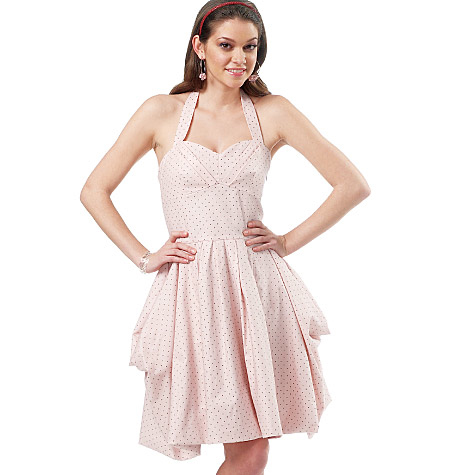 And imagine it in this vibrant bubblegum stripe! You could also do a tailored shirt or bodysuit for a very classic look, hence the material's namesake. Here, Burda Patterns 2561 & 7353: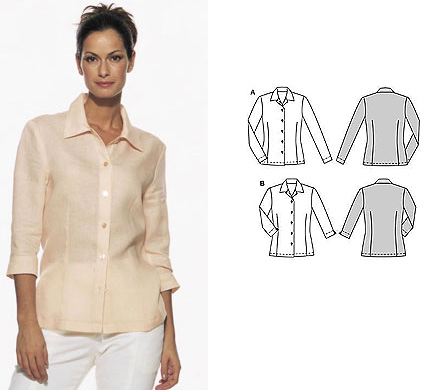
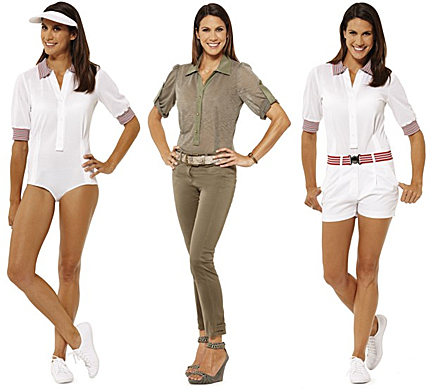
I love this acid lime green with orange:
Or try one of our double-face gauzes; it's like having a contrast lining without the work of lining the garment; double-face gauze is two-ply, having two usable faces. Imagine a rolled up sleeve!For younger girls, I like the idea of a romper. You'd want to line the shorts or bottom part of this style if using shirting, but the results would be so unique! It'd be just the perfect dose of a bold plaid in this short jumpsuit from Simplicity (#2222):  Lastly, I touch on the spring Easter holiday and the kiddies who love that special reason to dress up. With this adorable pattern from McCall's (#6304), Easter fashion is a walk in the park! Just check out some of our gingham shirting! So how about it? We've got so many choices in this beautiful, soft, high-end fabric, and now's the perfect time of year to get comfortable in it! Shop our entire selection of shirting here, now 20% OFF for a limited time only. Sale ends Wednesday March 28th at midnight, EST.
Thursday, March 22, 2012
All yarn 20% OFF in store only - this Saturday March 24th at MichaelLevine's downtown Los Angeles!
I just wanted to send a quick blog out to our followers about a great sale we have going on this weekend. In our store, located in the heart of the Los Angeles Garment District, we will be having a 20% off sale on ALL of our yarns (excluding already marked down items).

If you love to knit, or have been thinking about taking up a new hobby, this is the weekend for you. We carry so many great yarns. We have an amazing range of yarns for the beginner knitter as well as the advanced. We also carry all price points. We have Sashay by Red Heart, Cascade, Crystal Palace, Trendsetter, Gedifra, Noro, and Tahki Stacy just to name a few.


A few years ago, when we opened our Yarn department, I was encouraged to learn how to knit by the owners of the store. I was skeptical to say the least. I have 3 young kids and thought there was no way I could make anything that I would wear on the first try. I have to say I was so wrong. While we have yarns for the more experienced knitter, we have so many amazing yarns that with one or two balls you can make an amazing verigated or nubby scarf. Many of the yarns even have free downloadable patterns now. My first one was this multi colored brown chenille scarf. I still get compliments on it today. So warm and soft. No itch at all! After that I did this super fun and bright, thick & thin, multi color one. Also love it. So not something you could buy at Target!


While it is hard for me to find the time to make many scarfs, I do love yarn and the idea of making something that is one of a kind. If you have any desire to learn to knit or if you already knit and want to get started on a great holiday gift for your significant other, your little one, or a friend, come down this weekend and pick up some of our amzing yarns at a great price. I promise our selection will not disappoint!
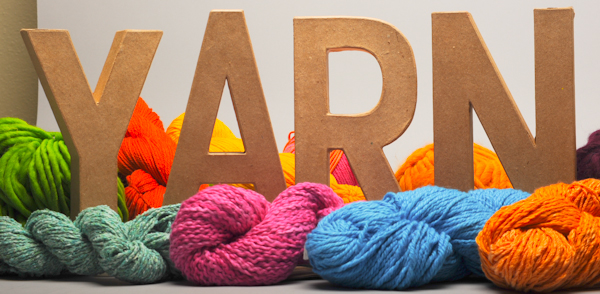
If you love to knit, or have been thinking about taking up a new hobby, this is the weekend for you. We carry so many great yarns. We have an amazing range of yarns for the beginner knitter as well as the advanced. We also carry all price points. We have Sashay by Red Heart, Cascade, Crystal Palace, Trendsetter, Gedifra, Noro, and Tahki Stacy just to name a few.
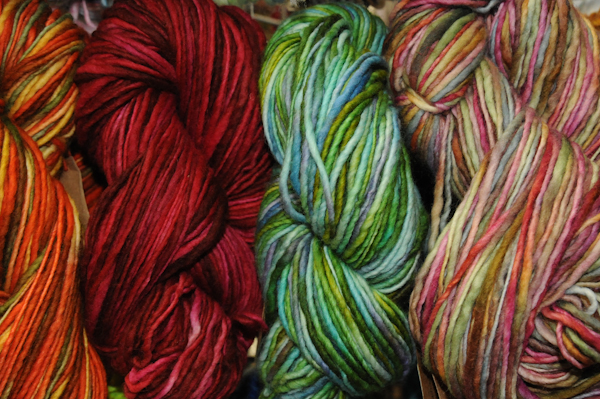
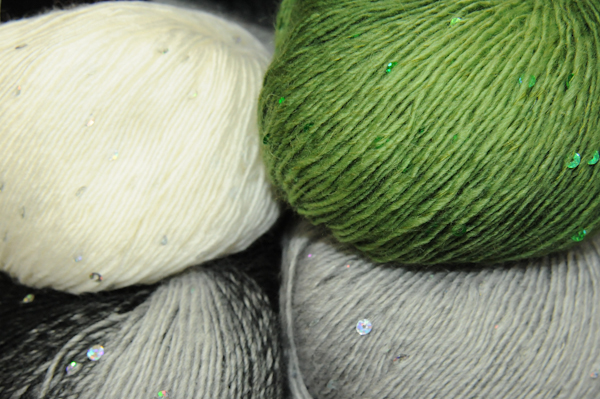
A few years ago, when we opened our Yarn department, I was encouraged to learn how to knit by the owners of the store. I was skeptical to say the least. I have 3 young kids and thought there was no way I could make anything that I would wear on the first try. I have to say I was so wrong. While we have yarns for the more experienced knitter, we have so many amazing yarns that with one or two balls you can make an amazing verigated or nubby scarf. Many of the yarns even have free downloadable patterns now. My first one was this multi colored brown chenille scarf. I still get compliments on it today. So warm and soft. No itch at all! After that I did this super fun and bright, thick & thin, multi color one. Also love it. So not something you could buy at Target!
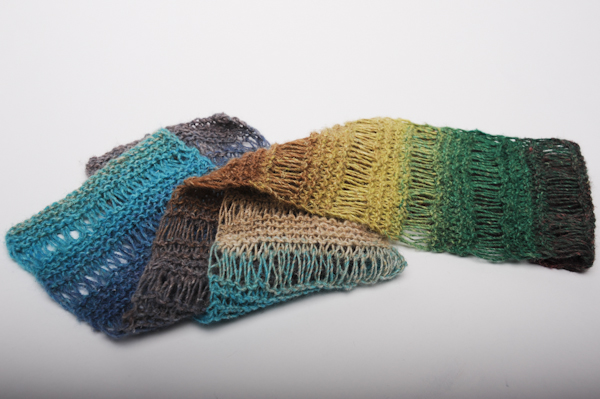
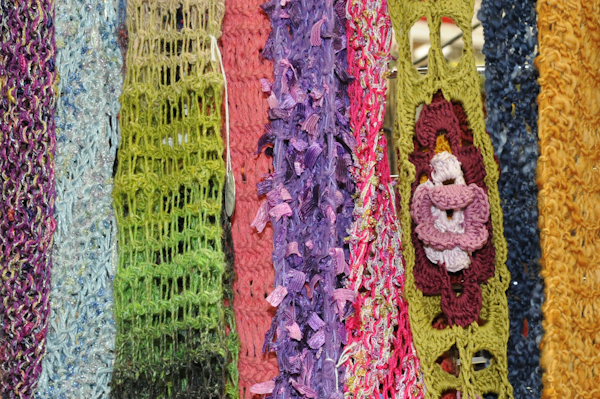
While it is hard for me to find the time to make many scarfs, I do love yarn and the idea of making something that is one of a kind. If you have any desire to learn to knit or if you already knit and want to get started on a great holiday gift for your significant other, your little one, or a friend, come down this weekend and pick up some of our amzing yarns at a great price. I promise our selection will not disappoint!
Friday, March 16, 2012
The Art of Indonesian Batik graces Michael Levine's and LowPriceFabric.com!
This week we highlight one of South-east Asia's most notorious textile arts, a method known as 'Batik', which uses a wax resist technique to create multi-layered print designs on various types of cloth; most commonly silk or cotton. I have been lucky to work first-hand with various batikers and visit batik factories in Bali, Indonesia, and gain an understanding of the detailed precision required to create these magnificently patterned textiles. I'm even more lucky that I get to write another blog entry about a place and textile art that I deeply love. Cheers to sharing some of my knowledge with you in celebration of our National Quilting Day Sale - where you'll find all of our Quilting Cottons (including the newly added Batik section) 20% OFF!
 You can take advantage of these savings both online and in our downtown Los Angeles store on Quilting Day, this Monday, March 19, and for an additional two days on our website only, at www.LowPriceFabric.com.
Now for a little story about Batik...
 The word 'Batik' is thought to have come from the Javanese amba ('to write') and titik ('dot' or 'point'). The art form predates written Javanese records, and is thought by some to be a native tradition. Commonly, a mixture of beeswax and paraffin are used to create the resist area of a design. The beeswax holds the design to the cloth, and the paraffin has a tendency to crack, which is a stylization characteristic of batik. Here is an example of the spiderweb effect created by the cracked wax:
 This is a sneak peek at one of our new swimwear fabrics, available soon, in a print made to look like batik. Although it is not a real batik, it illustrates very well the crackled look that is characteristic of many batiks.
There are two main batik-making techniques:
The first, original type and method of batik, is called batik tulis, or written batik, and entails drawing a design freehand onto the cloth. It is a very time consuming method and was originally done mostly by women. Batik tulis is made using a wooden or bamboo handled tool with a tiny metal reservoir, and out of it the wax seeps, through a very tiny spout. This needle-like pen is called a canting (pronounced "chonting"), and looks like this:
 Today, the batik tulis method is still used for designs of a freehand nature. Here is a picture from my last trip to Bali, where we visited a batiker replicating this floral sarong. You can see how the untreated cloth is stretched above the template and then the outline is "traced" in wax onto the blank sheet:

Here, after the wax has been applied and dries, dyes are painted on the cloth, into the wax-segregated areas of the motif:

After the dye has been placed, the cloth is then placed in the sun. One batiker told me (and I'm sure this depends on the types of dye used) that the brightness of the sun dictates the intensity of the finished color. Interesting, right?
Here is an example of some exquisite silk batik tulis that I bought in Bali, made here into a beautiful wedding gown:
 The secondary method, batik cap (pronounced "chop"), or stamped batik using copper blocks, was developed much later, in the 20th century, when production facilities faced a need to mass produce the detailed designs that would take ages to turn out using the traditional canting. Due to the labor intensive nature of this technique, batik cap was mostly done by men. Batik cap has a repetitive nature to the print. The batiks that we have just added at www.LowPriceFabric.com have all been made in this stamped manner. Here is an example; one of our many new additions:

This material started out as a plain white or natural colored cloth. First, the light floral pattern you see within the design was stamped in wax. Next, the cloth was tie dyed, if you will, a pale, mottled blue/purple. The color was processed, rinsed, and then the wax removed, either by washing in hot water or by ironing between sheets of newspaper. Next, the cloth was stamped with wax again, this time in the volcano and house pattern. Then, dyed again in the same colors/manner as before, but this time salt is thrown at the cloth, creating the "fizzy" texture within the color. The dye is processed, rinsed, and then the wax removed again. This is what you call a double-process batik. The more processes it goes through, the more expensive the finished material will be. Some batiks have as many as three or four processes, or "layers," to the design.
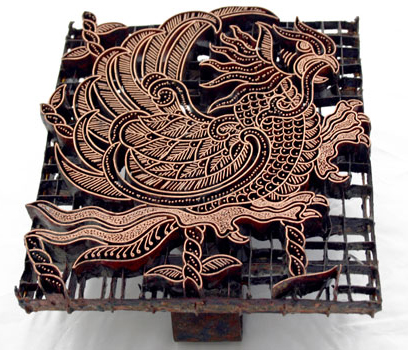
This is what the cap, or batik stamp, looks like, made from sculpted copper. These stamps are masterpieces in themselves, and a new one (often custom made) will come with a high price tag of at least a couple hundred dollars. That is why batik stamps are often passed down and around, and it isn't uncommon to find them for sale second hand. The craftsmen who create these stamps have a career entirely in itself. The stamps are dipped in a reservoir of hot wax kept over low heat, and applied to the cloth in a block printing method, at just the right temperature:

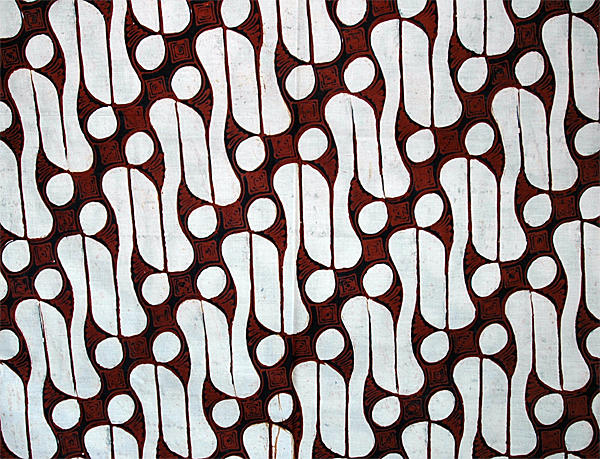
Other than the two methods by which it is produced, batik can be further sub-categorized by the style and design motif itself. To keep this from becoming a full on dissertation, I'll show you just one; my favorite, unmistakable pattern is Parang Rusak, or 'broken knife'. This style of batik pattern was originally reserved for royalty, for in historic times, ordinances were passed in the ruling centers of Java dedicating certain batik patterns as 'only wearable by members of certain status or relation to the sultan.' The differences in rank between members of the sultans' families and high officials could be easily determined by the batik pattern one wore. Commoners were expressly forbidden to wear these designs:
 I thoroughly enjoy seeing such a traditional pattern and textile show up in modern fashion. Here are two images of Parang Rusak batik popping up in the western fashion scene:
 Here, Jessica Alba arrives at a charity event in a very familiar print:

Another common use for batik in the United States is for quilting. Many quilters enjoy mixing in a few batik quarters here and there, or some will even do a full quilt entirely of batik, featuring some sort of rainbow spectrum gradation. Just google images for 'batik quilt' and you'll turn up dozens of examples/ideas. Our selection of cotton batiks would be perfect for quilting, as we have shades of pink, orange, yellow, green, turquoise, blue, purple, and black:
 Given the age and history of the art form, batik has certainly become the traditional cloth of the Indonesian people. It is worn for temple and ceremony events, used in most hotels and tourist attractions, placed in the home, and often salvaged and sewn up into patchwork blankets. And now, flight attendant uniforms on most of Southeast Asia's major airlines feature a "batik" looking printed cloth to replicate the traditional textiles of the region. What makes batik so desirable and interesting is its beauty, and the fact that it's made by hand under very traditional methods, without the need for industrial machinery or equipment. The techniques of old are still very much alive, and you can see from my photographs that the words 'primitive' and 'modern' are interchangeable when it comes to batik factories! The batiks we are selling online have all been made by hand by the artisans of Bali, Indonesia and imported by Hoffman of California. It is most pleasing to me that through the sale of these batiks, we are supporting and advocating the awareness of such a rich, creative culture and traditional textile art. I love batik and I hope that your experience with these textiles will open one door that leads to another, and that you may continue exploring and discovering beautiful batik textiles.
You can take advantage of these savings both online and in our downtown Los Angeles store on Quilting Day, this Monday, March 19, and for an additional two days on our website only, at www.LowPriceFabric.com.Now for a little story about Batik...
Humble Beginnings:
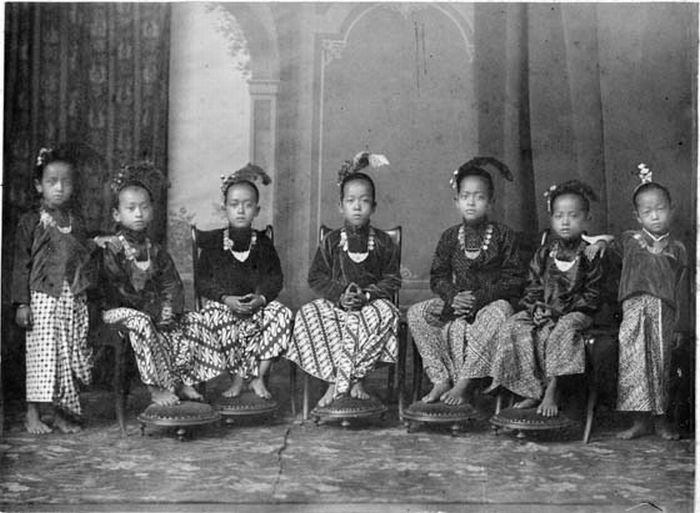 The word 'Batik' is thought to have come from the Javanese amba ('to write') and titik ('dot' or 'point'). The art form predates written Javanese records, and is thought by some to be a native tradition. Commonly, a mixture of beeswax and paraffin are used to create the resist area of a design. The beeswax holds the design to the cloth, and the paraffin has a tendency to crack, which is a stylization characteristic of batik. Here is an example of the spiderweb effect created by the cracked wax:
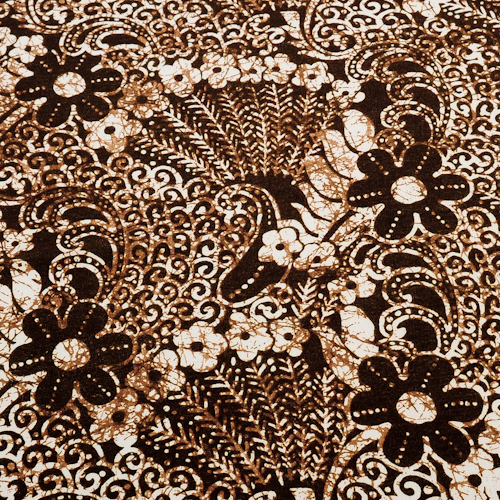 This is a sneak peek at one of our new swimwear fabrics, available soon, in a print made to look like batik. Although it is not a real batik, it illustrates very well the crackled look that is characteristic of many batiks.
There are two main batik-making techniques:
The first, original type and method of batik, is called batik tulis, or written batik, and entails drawing a design freehand onto the cloth. It is a very time consuming method and was originally done mostly by women. Batik tulis is made using a wooden or bamboo handled tool with a tiny metal reservoir, and out of it the wax seeps, through a very tiny spout. This needle-like pen is called a canting (pronounced "chonting"), and looks like this:
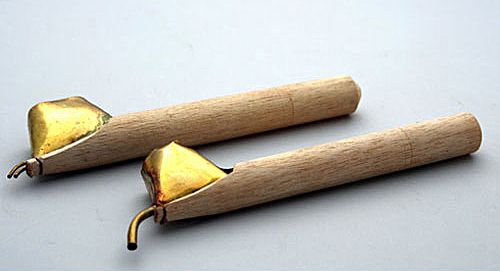 Today, the batik tulis method is still used for designs of a freehand nature. Here is a picture from my last trip to Bali, where we visited a batiker replicating this floral sarong. You can see how the untreated cloth is stretched above the template and then the outline is "traced" in wax onto the blank sheet: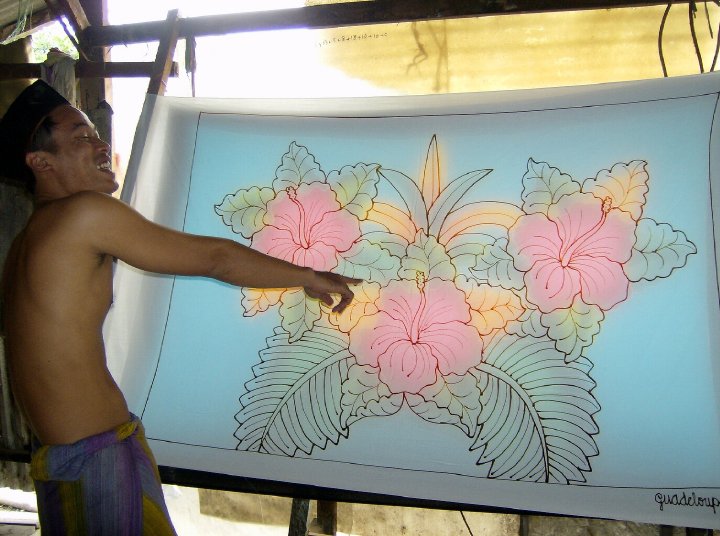
Here, after the wax has been applied and dries, dyes are painted on the cloth, into the wax-segregated areas of the motif:
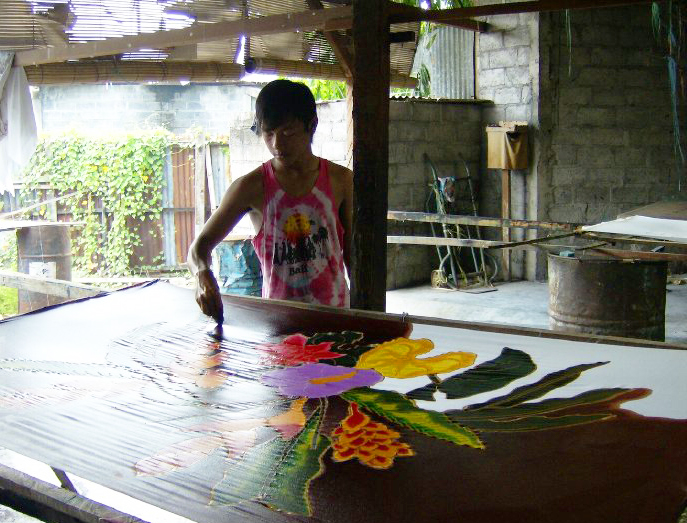
After the dye has been placed, the cloth is then placed in the sun. One batiker told me (and I'm sure this depends on the types of dye used) that the brightness of the sun dictates the intensity of the finished color. Interesting, right?
Here is an example of some exquisite silk batik tulis that I bought in Bali, made here into a beautiful wedding gown:
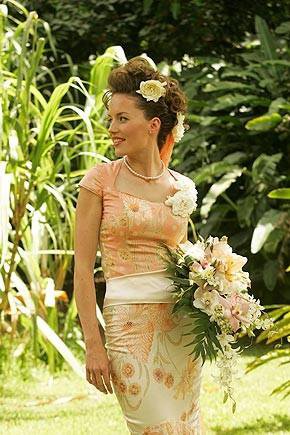 The secondary method, batik cap (pronounced "chop"), or stamped batik using copper blocks, was developed much later, in the 20th century, when production facilities faced a need to mass produce the detailed designs that would take ages to turn out using the traditional canting. Due to the labor intensive nature of this technique, batik cap was mostly done by men. Batik cap has a repetitive nature to the print. The batiks that we have just added at www.LowPriceFabric.com have all been made in this stamped manner. Here is an example; one of our many new additions:
This material started out as a plain white or natural colored cloth. First, the light floral pattern you see within the design was stamped in wax. Next, the cloth was tie dyed, if you will, a pale, mottled blue/purple. The color was processed, rinsed, and then the wax removed, either by washing in hot water or by ironing between sheets of newspaper. Next, the cloth was stamped with wax again, this time in the volcano and house pattern. Then, dyed again in the same colors/manner as before, but this time salt is thrown at the cloth, creating the "fizzy" texture within the color. The dye is processed, rinsed, and then the wax removed again. This is what you call a double-process batik. The more processes it goes through, the more expensive the finished material will be. Some batiks have as many as three or four processes, or "layers," to the design.
This is what the cap, or batik stamp, looks like, made from sculpted copper. These stamps are masterpieces in themselves, and a new one (often custom made) will come with a high price tag of at least a couple hundred dollars. That is why batik stamps are often passed down and around, and it isn't uncommon to find them for sale second hand. The craftsmen who create these stamps have a career entirely in itself. The stamps are dipped in a reservoir of hot wax kept over low heat, and applied to the cloth in a block printing method, at just the right temperature:
Other than the two methods by which it is produced, batik can be further sub-categorized by the style and design motif itself. To keep this from becoming a full on dissertation, I'll show you just one; my favorite, unmistakable pattern is Parang Rusak, or 'broken knife'. This style of batik pattern was originally reserved for royalty, for in historic times, ordinances were passed in the ruling centers of Java dedicating certain batik patterns as 'only wearable by members of certain status or relation to the sultan.' The differences in rank between members of the sultans' families and high officials could be easily determined by the batik pattern one wore. Commoners were expressly forbidden to wear these designs:
 I thoroughly enjoy seeing such a traditional pattern and textile show up in modern fashion. Here are two images of Parang Rusak batik popping up in the western fashion scene:Here, Jessica Alba arrives at a charity event in a very familiar print:
Another common use for batik in the United States is for quilting. Many quilters enjoy mixing in a few batik quarters here and there, or some will even do a full quilt entirely of batik, featuring some sort of rainbow spectrum gradation. Just google images for 'batik quilt' and you'll turn up dozens of examples/ideas. Our selection of cotton batiks would be perfect for quilting, as we have shades of pink, orange, yellow, green, turquoise, blue, purple, and black:
Given the age and history of the art form, batik has certainly become the traditional cloth of the Indonesian people. It is worn for temple and ceremony events, used in most hotels and tourist attractions, placed in the home, and often salvaged and sewn up into patchwork blankets. And now, flight attendant uniforms on most of Southeast Asia's major airlines feature a "batik" looking printed cloth to replicate the traditional textiles of the region. What makes batik so desirable and interesting is its beauty, and the fact that it's made by hand under very traditional methods, without the need for industrial machinery or equipment. The techniques of old are still very much alive, and you can see from my photographs that the words 'primitive' and 'modern' are interchangeable when it comes to batik factories! The batiks we are selling online have all been made by hand by the artisans of Bali, Indonesia and imported by Hoffman of California. It is most pleasing to me that through the sale of these batiks, we are supporting and advocating the awareness of such a rich, creative culture and traditional textile art. I love batik and I hope that your experience with these textiles will open one door that leads to another, and that you may continue exploring and discovering beautiful batik textiles.
Subscribe to:
Posts (Atom)